Showing posts with label Bengi. Show all posts

REVIEW: PremRock - A Clean, Well-Lighted Place


PremRock - A Clean, Well-Lighted Place
Label - Self Released
Release Date - April 15, 2014
  Purchase


If you forced me to pin down the two things I'm most passionate about in my life, music and sports would top the list.  It's hard to say which passion is stronger and which came first, but they both take an equal amount of my time and are consistently there for me when I need them the most.  My interest in each is largely separate, but in the rare occasions they happen to overlap, it's always a special treat.  PremRock's new album A Clean, Well-Lighted Place isn't a sports themed LP, but if you're a sports junkie like myself (specifically an NFL/NBA junkie) the staggering amount of clever sports references woven throughout the LP's 16 songs will soon become mantras that you can't help but repeat as part of your daily routine.  It's not just that Prem name drops Reggie Miller, Ken Griffey Jr., Khalid El-Amin, James Harden, Ndamukong Suh, and countless others, it's the way he does it.  PremRock has always been great at incorporating metaphors and wordplay into his rhymes and has had plenty of sports references in his past work, but he takes it to another level on A Clean, Well-Lighted Place.  Lines like "I miss you like a Chris Dudley free throw" and "Don't let the game get to your head like Jahvid Best" are heady lines that appeal to a strict demographic- the sports savant/hip hop nerd, aka Me.  Prem's ability to seamlessly incorporate these type of sports references into his already intricate song structures is like the cherry on top of what would already be a great album with or without them, and makes it the single greatest sports reference rap LP of all time (I should know).

There's a lot more in PremRock's head than sports though, and he proves how well rounded an artist he's become throughout the LP's length.  The album gets off to a fantastic start with a murders row of "skills" based tracks in "Photosynthesis", "Let Me See Your Tongue", "Lens", and "Supreme".  "Photosynthesis" is an excellent introduction to PremRock's style for any listeners who are new to his music.  The track compares his growing artistic career to a plant that's "turning shine into something I can eat" and is a perfect example of his expanding artistic range.  "Let Me See Your Tongue" might be the most straightforward rap song of the bunch and allows Prem to truly flex his rhyming chops.  It also just got the album's first video treatment and features a trademark moveable pieces beat from Blockhead.  PremRock follows those two songs with two of my favorite rap songs of the year, the Quelle Chris produced mission statement "Lens" and the Willie Green produced banger "Supreme" (on which Prem lifts the opening bars from Ghostface's classic song "Nutmeg" from his sophomore album Supreme Clientele to serve as the song's hook).  PremRock's assured delivery on both tracks combined with the upper echelon beats he received from Chris and Willie are a strong sign of the upward trajectory of his career as an MC.  

PremRock continues to evolve as a storyteller as well.  "Berlin" and "Junkie" are perhaps the best examples and sit back-to-back almost halfway through A Clean, Well-Lighted Place.  "Berlin" is technically about a one night stand, but it's also a window into the life of a traveling musician.  Prem has logged many miles the last several years in various tours through Europe promoting his music.  While I've never hopped from country to country the way he has on his various adventures, he manages to put the listener right there with him as he becomes intrigued by a chance encounter that he (and her as well) knows he won't soon forget, but also knows it doesn't have a chance to last more than one night.  It's this same type of honesty and self reflection that makes "Junkie", another song about a chance encounter (this time with, you guessed it, a junkie), work just as well.  

"Rod Stewart" could be a fantastic storytelling song, although it might also be a reflection about the end of an actual relationship.  Either way it's telling that PremRock is getting to the point that many of his songs blend fiction and reality so well it's hard to tell when he's embellishing and when he's actually pouring his heart out.  It's one of two songs produced by Marmaduke, a mysterious producer I only know of through his work with the incomparable billy woods.  Marmaduke has become the type of producer that just doesn't seem capable of making a bad beat.  He continues to show an ability to create mood setting soundscapes that seem to coax existential musings out of the MC's he works with.  The way PremRock is able to encapsulate the complex emotions that overwhelm someone trying to move on from a long term relationship is a perfect fit for Marmaduke's buzzing, melodramatic framework.  Premrock also shows off his conversational rhyme style, which he's been perfecting for a while now.

The other Marmaduke produced song, "Can't Make It Stop", is my personal favorite song on A Clean, Well-Lighted Place and features the strongest writing of PremRock's short career and simmering beat from Marmaduke that contains a perfectly utilized upright bass sample.  You almost have to have your finger on the rewind button to catch all the philosophical wordplay which is highlighted by the line "An obstruction of views is really nothing new/ If fiction is more convenient it's soon to become the truth".  PremRock has worked with billy woods quite a bit over the last few years (woods actually appears as backing vocalist on the hooks for "Lens" and "Waiting For Godot") and it appears that billy's highly literate style has rubbed off on Prem, as "Can't Make It Stop" sounds like something woods himself might have penned to a Marmaduke beat.  This type of evolution as a writer is an exciting development for fans who have kept up with Prem's recent output.  He's always been a top notch rapper, but if he can continue to grow as a conceptual writer he'll give his career a true chance at longevity.

There are a few songs that come off as sub-par versions of perspectives he expresses other places on the LP ("Juliet Has Survived" and "Indifferent" come to mind), but overall A Clean, Well-Lighted Place is a consistent front to back listen.  While there aren't any bad songs on the album, a sharper focus on quality control might just be the ticket to push Prem to a higher artistic plateau.  The album closes almost as strong as it starts with "Young Alone Alive" and "Hold It Together".  Steel Tipped Dove provides what might be the album's best beat for "Young Alone Alive" on which PremRock twists a series of literary references into his rhymes alongside his own one liners and words of wisdom, which sound as if they were culled from classic novels themselves.  It sounds like the beat lit a fire under Prem as his writing and delivery are more measured and purposeful than anywhere else on the LP.  "Hold It Together" is reminiscent in feel to some of his past material and is a strong showcase of his intricate, referential rhyme scheming.  PremRock has perfected his style in the traditional hip hop sense, meaning he never comes wack technically.  On his last couple projects though, starting with the Tom Waits inspired Mark's Wild Years and continuing on A Clean, Well-Lighted Place, he's proven that his aim is to be much more than a great rapper.  PremRock intends to make timeless art that is bigger than a genre or a style, and to my ears his hard work is beginning to pay off.

REVIEW: Sisyphus - Sisyphus


Sisyphus - Sisyphus
Label - Asthmatic Kitty/Joyful Noise
Release Date - March 18, 2014

I assume that most listeners who stumbled across Sisyphus’s new self-titled LP decided to give it a listen thanks to a prior relationship with the music of either singer/songwriter Sufjan Stevens or electronic musician Son Lux.  Not that the 3rd member of the group, rapper Serengeti, is any less accomplished (quite the contrary), but being the most prolific, creative, and whimsical (whimsy is Geti’s artistic mojo) rapper on the planet over the last decade hasn’t netted Geti near the financial windfall (or at least the touring opportunities) that have allowed artists like Sufjan and Son Lux to make music their first and only profession.  Maybe it’s because of this that the album still feels like a Serengeti vehicle even though it is a collaboration in the truest sense of the word.  This could also be because I’ve been huge Serengeti fan for the last 5 years and am not as intimately familiar with the work of Stevens and Son Lux, but the fact that Serengeti has been such a creative force (he’s released over 25 projects since 2005) and has so little to show for it is off putting to me and I’m sure it’s off putting to Stevens and Son Lux as well. 

This is the crux of this Sisyphus ‘super-group’, Stevens and Son Lux saying “How can we frame a pop album around Serengeti’s unique talents and make it click for listeners in a way his past work hadn’t been able too?”  The group got off to an uneven start with the s/s/s EP from 2012, a 4 song, long-distance collaboration that was weird enough to be interesting, but sounded like a multi-genre sound collage on which each artist worked separately and then jammed a bunch of ill-fitting pieces together.  While s/s/s wasn’t a outright failure, it was still hard to imagine that its better named follow-up Sisyphus would turn out to be an album of the year contender.  Originally conceived as an EP, the trio’s in person sessions at Son Lux’s wife’s parents’ Indianapolis home spawned so much great material that a full length album was born out of necessity.  As a whole, it is at once playful, melancholy, scary, and uplifting and never feels contrived.  The album itself, as well as the individual songs, are dynamic in nature.  Standouts like “Calm it Down”, “Rhythm of Devotion”, and “Alcohol” seem simple and repetitive initially, but morph into completely different shapes at their halfway points. 

“Calm it Down” kicks of the album and is perhaps the best example of the group’s chemistry.  It’s the type of song that people who aren’t familiar with Serengeti might write off as dumbed down, corny, or childish but it’s really a manifestation of Geti’s brilliant alter ego Kenny Dennis.  He’s not actually rapping as Kenny Dennis, but the common sense/simple advice mantra of “When you feel…You need to calm it down” is a perfect representation of the style and sense of humor that Geti displays on all of his Kenny Dennis records.  Serengeti fans will love the stripped down 1st half of the song that captures the KDz essence, but it’s the song’s melodic 2nd half that really sets the table for the album’s vibe.  It smoothly transitions to a reflective verse sung by Stevens backed by some great atmospheric production from Son Lux before Geti repeats the same verse over a solo piano to close the song.  It’s an amazing moment that leaves you wondering, “Did Sufjan write that verse or did Serengeti?” and “How did they come up with that idea?”  Nothing feels forced.  When the album transitions from “Calm it Down” to a reworking of a Sufjan one-off solo song from an old hard drive entitled “Take Me”, it feels natural, even if the song doesn’t involve Geti or Son Lux (that I know of).

While “Calm it Down” is a great song to kick off the project, it’s still a little too quirky to qualify as a pop song.  “Rhythm of Devotion” on the other hand is the type of song that is simply too big for its britches.  If it was forced into top 40 playlists for a week or so I think it could have legitimate staying power.  Son Lux’s funky alternating groove sets the table, but the interplay between Geti’s rage/repetitions of devotion and Sufjan’s silky smooth pleas to “be your man” make the song an infectious romp with heart that’s impossible to hate and hard to get sick of.  “Booty Call” and “Lion’s Share” are also quality pop songs that feature Serengeti’s rapping prominently.  Serengeti’s clever sexual wordplay on “Booty Call” and ability to make a dance song out of a tale of two bank robbers on “Lion’s Share” are prime examples of his ingenuity as an artist. 

All three artists had a blast making this album together and you can feel it in the albums overall vibe.  While it’s a fun listen for the most part, they also have a serious side and allow it to really come out on the last 3 songs.  While “Calm It Down” sounds like it could have fit on a Kenny Dennis album, “Dishes In The Sink” is more similar to an offering from one of Serengeti’s recent albums like Saal or Family and Friends.  The emotional deadpan and descriptive detail that he displays on these types of tracks is funny, sad, and insightful all at the same time.  You’re never quite sure what events/relationships inspire these songs, but they always seems to come from a place of truth even if they’re completely fictional.  Sufjan Stevens complements both sides of Serengeti throughout Sisyphus, especially on “Hardly Hanging On”, a direct continuation of “Dishes In The Sink”.  It often sounds like Serengeti or Sufjan wrote pieces that the other either added onto or was able to view through a different lens and offer his own take.  Because of their willingness to try to grasp the others perspective and work together in person, tracks that might sound completely unrelated out of context stack together as if each song is an answer to the previous song's question.

While I've talked mostly about the songwriting talents of Serengeti and Sufjan Stevens throughout this review, Son Lux's amazing work behind the boards is not to be understated.   As a producer it seems there's nothing that Son Lux can't do and the full range of his talent is on display throughout Sisyphus.  The album's two best songs "Rhythm of Devotion" and "Alcohol" are perhaps the best examples of the power and range of his production.  "Rhythm of Devotion" shows his ability to craft Daft Punk-esque dynamic anthems and my favorite song of 2014 "Alcohol" features a subtly shifting industrial beat that is just getting interesting when Serengeti's stunning verses about hereditary addiction are wrapping up.  While I may get the impression that Serengeti's unique talents are the fulcrum for the music that Sisyphus makes, this is an album that defies any genre classification.  If anything it feels like the discovery of a new genre, an album that truly sounds different from anything else out there from an era where most everything sounds like a distorted copy of a copy.

REVIEW: Homeboy Sandman & Paul White - White Sands


Homeboy Sandman & Paul White - White Sands
Label - Stones Throw Records
Release Date - February 25, 2014

When Homeboy Sandman spontaneously shouts out "Paul White made this!" before his verse comes in on "Bad Meaning Good" you can sense his excitement about working extensively with a producer like the London based White.  While Sandman and Paul White have worked together in the past, White has become one of the hottest producers around the last couple years thanks to some memorable collaborations with Detroit rapper Danny Brown including "Side A (Old)", "The Return", "Wonderbread", and "Lonely".  White might not be a household name yet, but he's the type of emerging talent that Sandman should be working with.  Because of Homeboy Sandman's strong non-conformist persona his music has never really been "hip" despite his immense talent.  But Paul White, in addition to being a true producer in the Alchemist mold, is a buzz worthy beat maker in 2014.  Working with White on their new White Sands EP still might not be enough to make Sandman's music hip in the same way that Danny Brown's is, but it's one more step towards obtaining the type of artistic cache that allows him to work with the producers he wants and ultimately make the type of classic hip hop that he strives to create.

Sandman's second of two EP's from last year, All That I Hold Dear, saw him reign in the densely packed, verbose style he displayed on the majority of his previous Stones Throw releases in exchange for a more heartfelt, direct approach.  White Sands fits somewhere in between, there's plenty of complex, intricate wordplay on songs like "I Saw A World" and "The Butcher", while "Fat Belly" and "Wade In the Water" are some of the most universal and fun songs that Homeboy Sandman has ever made.  Overall White Sands feels like a piece of music that could have been released in 1991.  Not because it's trying to be a throwback album or Sandman is mimicking any particular style, quite the contrary, but in the same way that several MC's from that era were able to speak honestly on all walks of life and still have fun making a highly skilled form of music, Sandman is able to.  He's a unique artist, but he's clearly studied the greats and loves the form.

Paul White is equally responsible for the album's classic era feel.  He brought a level of polish and creative integrity to the project that is often ignored by so called hip hop "producers".  He builds his beats through his amazing ear for obscure psychedelic samples and then adds little flourishes around Sandman's verses to make the tracks feel full.  His layered pianos on "I Saw A World" build the tension for Sandman's pointed barbs, his simple use of maracas on "Echoes" gives the beat an itchy uneasiness that compliments Homeboy Sand's horrific depiction of a homeless prostitute/junkie, and his aquatic bass sample for "Wade In The Water" immediately made me think of De La Soul's "Tread Water", not directly in sound, but more in overall feel and ability to convey an environmental mood.

Homeboy Sandman is still the king of the concept track, even if the concept tracks are starting to sound less like concept songs and more like songs that happen to have concepts.  "Fat Belly" is basically a cleverly rapped list of all the delicious vegan food Sandman gorges himself on, point being, vegans have appetites too.  Sometimes Sandman gets a little too cute with his more lighthearted songs, but "Fat Belly" works and is a great example of the artistic balance he demonstrates throughout White Sands.  "Echoes" and "Last Rites" are more somber in tone, but again are great examples of Sandman making concept songs that don't really sound like concept songs.  They both have defining topics (a homeless woman on "Echoes" and soul searching/making peace with yourself on "Last Rites") but Sandman's seamless hooks and more understated flows ensure nothing sounds forced.  

White Sands closes with its two strongest songs in "The Butcher" and "Bad Meaning Good".  The beat for "The Butcher" is my favorite on the album and features some fantastic vocal samples from Paul White enhanced by Sandman's refrain that sits flush against the vocal samples.  The track features some great wordplay, "I say good luck/ but luck ain't ever trumped me taking lumps" and "check the corner for a dunce" as well as Sandman revealing some details to a new relationship that seems to have recharged his batteries.  "Bad Meaning Good" serves as the albums second single after "Wade In The Water" and is probably the most traditional Homeboy Sandman song on the album.  His "I'm a nice guy, but I don't take any BS" steez is on full display, which of course comes with his trademark tongue in cheek wit.  This is the essence of Homeboy Sand's appeal, he's a nice, funny guy who makes observational, hard, call-you-out-if-you-ain't-dope throwback rap music.  He knows his lane and sticks to it, focusing on improving his craft.  This limits his widespread appeal in some respects, but ensures that new fans turn into long term fans.  If your looking for positive, grown up hip hop that's both entertaining and intellectually challenging, you'd be hard pressed to find a better release in 2014 than White Sands.

REVIEW: Willie The Kid - The Living Daylights


Willie The Kid & Bronze Nazareth - The Living Daylights
Label - Embassy Ent. / Black Day In July Productions
Release Date - February 11, 2014
While there is something to be said for artists who emerge from hiding every four or five years to drop well thought out, meticulously edited albums, I've always been more drawn to musicians who seem driven to create in waves.  Being prolific in the modern music climate is almost a necessity though and fosters an environment where tenderfoots feel like they should have to release music at a rate that far outpaces their experience and level of quality control.  This is especially prevalent in rap music where all you need a beat and verse to make a song.  Over the last year Willie The Kid has been prolific as anyone but has managed to maintain his creative edge and seems to be getting better with every release, turning me from a casual fan into someone who will listen to anything with Willie's name attached to it.  

The first time I saw the video for "The Guilt" earlier this year and realized his next release would be a full-length Bronze Nazareth produced affair I knew his hot streak would continue.  I wrote about “The Guilt” and its reflective video previously for WLFY and it’s the type of song that’s so tightly crafted and thoughtful that it always cuts through and grabs the listener’s attention, especially when the family ties theme is set up so beautifully with the previous song "Sweet Sorrow".  Playing out as a soul bearing letter in rap form to a long time significant other, "Sweet Sorrow" finds Willie giving accounts of nights he ignored calls and "set myself up as if I wouldn't give a fuck" before spitting that he's "hoping I can change like Jimmy did for Chrissy".  It's a refreshing admission on an incredibly honest song that shows Willie has chambers he's willing to visit that most rappers prefer not to enter or don't even know how to find.


Willie's drive to succeed is cited as something that caused friction in his relationship, and while he expresses regret about past transgressions, he clearly doesn't have any hangups about his ambition.  "Avalon", "Breakfast In France", "Coming From", and "Bless My Food" all find Willie enjoying the fruits of his labor in a way that feels more genuine than most rap songs that toast to excess.  “Breakfast In France” in particular is a full circle type of song.  Maybe capturing the theme of the album and Willie’s life better than any song on The Living Daylights, “Breakfast In France” finds Willie toasting Mimosas in Paris, but always keeping his childhood sitting on the stairway in the back of his mind.

"Avalon" and "Bless My Food" are the album's bookends and also feature the two best guest appearances on the album from Roc Marciano and Tekh Togo, although the buzz worthy Boldy James's verse on "Ain't Nothing" isn't far behind.  Roc Marciano and Willie glide over Bronze Nazareth's excellent David Axelrod sample flip on "Avalon" while Tekh Togo (who's also the man behind the majority of Willie the Kid's music videos) promises to "play the game like the Lannisters/ and pull some fire out the canister" before Willie ends the album by calmly repeating the mantra "Bless my food, say my grace/ God willing, I'm chilling in a good space".  It's a simple sentiment of embracing the moment and being thankful for it, but its power is intensified because of how it relates to the rest of the album and Willie the Kid's story.

The Living Daylights almost plays out like one giant thank you to mid 90's witty gangster rap.  Willie the Kid is the type of guy who knows every word to every classic gangster flick and every word to every classic hardcore rap album and his lyrics bear it out ("Willie two times/ I get the papers, get the papers").  It's not by accident that his older brother La the Darkman (now going by L.A.D) who dropped a gangster rap classic as a Wu-Tang affiliate in Heist of the Century in 1998 shows up on two tracks, the hard-as-nails duet "Fucking Blades" and a short solo track, the murderous "Ice Cold Guinness".  He pays further tribute to the Wu-Tang Clan on "Wu Babies" by inviting the sons of Ghostface Killah and Old Dirty Bastard (Sun God and Young Dirty Bastard) to represent for the next generation of the Wu, which is appropriately closed by a classic '90s quote from Ghostface about building a rap career to give "our babies" something to fall back on.

Willie's shown an ability to "acclimate like a native" when it comes to working with different producers or artists, but The Living Daylights is an album that highlights his earliest influences and dreams for his life and career, his musical DNA.  Bronze Nazareth's rugged soul is the best current incarnation of the classic Wu-Tang sound and it gave Willie the perfect platform to put the music he sees in his head on full display.  The Living Daylights is a confident album by an artist that locked himself in a comfort zone and saw his vision through to the end.  It almost seemed inevitable that Willie the Kid would eventually team up with Bronze Nazareth for a full length project because of their Michigan roots and Wu-Tang ties, here's hoping their next collaboration won't take nearly as long to materialize.

Track of the Day: ScHoolboy Q – “Break the Bank” (Music Video)


ScHoolboy Q’s collaboration with The Alchemist “My Homie” from his sophomore album Habits & Contradictions was probably the best track on that project and their new track “Break The Bank” is undoubtedly the best track on Q’s new album Oxymoron.  The Alchemist has a habit of bringing the best out of the rappers he works with and it’s certainly been no exception with ScHoolboy Q.  Oxymoron as a whole is a flat out scary back to back listen.  An album that harkens back to a time when gangster rap music was really made by gangsters, Oxymoron is a brutally uncompromising listen that continues the tradition of TDE artists making the albums THEY want to make. 

ScHoolboy Q had no intentions of adjusting his vision for Oxymoron to chase label mate Kendrick Lamar’s success and “Break The Bank” best sums up his mentality in creating the TDE record that would follow Good Kid, M.A.A.D. City.  Oxymoron is as purposefully depressing a record as you could expect Q to make with this much on the line, but he’s still determined to ‘break the bank’.  The song is a flat out amazing display of rapping chops on which Q unloads a series of machine gun flows that any MC would have a hard time replicating all while laying down a visual account of the life of crime that led him to a career in music.  “Break The Bank” is punctuated by a sing song refrain that highlights ScHoolboy Q’s wide vocal range. 

He sounds like he’s coming for the crown and confirms it when he slurs “Tell Kendrick move from the throne, I came for it” midway through the song.  All the TDE artists have a strong competitive spirit, even between each other, and this makes it easier for them to separate from the crowd.  The stark video for “Break the Bank” is a great visual representation for the album as a whole, at least more so than the previously released videos for “Collard Greens” and “Man of the Year”, which are feel good outliers on the almost uniformly dark Oxymoron.  The album's available at all major retailers on February 25th, Target features a deluxe edition with a couple of extra songs.

Kurious - "Delusional" (Music Video)


While Kurious may not be a household name on the modern rap scene, he's been around since the early 90's, dropping a classic album in 1994 with A Constipated Monkey as well as rhyming alongside MF DOOM on both the KMD album Black Bastards and DOOM's solo debut Operation: Doomsday.  Since that time he had been largely absent from the rap game until the release of his 2nd solo album II in 2009.  I doubt Kurious will ever begin to release music on a consistent basis, which makes it all the more impressive that every time he resurfaces not only does he remind me how dope he is, but always seems to have improved along the way.

His new single "Delusional" and its accompanying video are a perfect example of how a rapper from a completely different era can stay relevant not by catering their sound to a certain audience or trend, but by just being true to their self.  Kurious has always had an ability to mix humor, honesty, and slick observations to create multidimensional songs that you can keep coming back to and "Delusional" is no exception.  His songs have always been visual, but to this point he's never had a video do one justice.  That's not the case here as Kurious's head is completely removed from his body, matching his unhinged delivery perfectly.  His music has always had a tinge of psychedelia and the video does a great job capturing the schizophrenic nature of his verses.

Track Of The Day: Sisyphus - "Alcohol" (Music Video)


"Alcohol" isn't the first track Chicago rapper Serengeti has released in collaboration with singer/songwriter Sufjan Stevens and electronic producer Son Lux, but it feels like the start of something big.  The trio's 2012 EP Beak & Claw, released under the name s/s/s was overly indulgent at times for the sake of experimentation, but its high points (particularly the amazing "Beyond Any Doubt") made their willingness to trust their creative instincts worth it.  Any rough edges that might have existed on Beak & Claw have been sharpened into fine points that penetrate your consciousness from all angles throughout "Alcohol", the second single from their upcoming self titled LP Sisyphus set to drop on March 18 via Asthmatic Kitty and Joyful Noise.

Serengeti's rapid fire, stream of consciousness verses are sandwiched between him repeating the phrases "I am my mother's son" and "I am my father's son" and getting existential about his genetic makeup.  Almost halfway through, the song shifts into a dynamic instrumental that is a fantastic display of Son Lux's unique sonic composition skills before Sufjan closes the song with refrain of "I am not my father" that seems to be seeping into the song from another dimension to offer an counterpoint to Geti's musings.  All of this is intensified even further by a jaw dropping beat-synced slide show of pictures that puts the modern human condition on full display.  This multitude of factors make watching the video for "Alcohol" a near spiritual experience, one that's hard to get out of your head and even harder not to revisit immediately.


Willie The Kid - "The Guilt" (Music Video)


Willie The Kid has been steadily releasing projects since the mid 2000's, but in the last couple years he's seen his profile raise considerably thanks collaborations with The Alchemist and some of The Alchemist's rap friends like Roc Marciano, Action Bronson, and Boldy James.  His music has always carried a strong Wu Tang influence which makes sense since his older brother La The Darkman released one of the all time great Wu-Tang affiliate albums The Heist of the Century back in 1998, but recently he's added some versatility to his style, switching between his usual streetwise storytelling and a name-brand dropping high-class hustler/playboy style.  While I prefer Willie's gritty street raps, the range he's displayed has been impressive and has me more excited than ever about his career.  For his upcoming album with longtime Wu-Tang affiliate producer (and fellow Michigan native) Bronze Nazareth, it feels like he might be pulling it all together and creating a defining artistic work. 

The lead single "The Guilt" is a not just a perfect example of Willie's ability to spin a tightly crafted street narrative, but gets right to the core of rap music's innate appeal.  The song is less than 3 minutes long and Willie only rhymes for a minute, but what a minute it is.  You don't need to watch the outstanding video to visualize the tragic events described in the song, but watching it puts into perspective all of the content and emotion that Willie is able to get across in a single verse.  The soulful beat and perfect vocal sample enhance the song's emotional pull and make it the most powerful sub 3 minute song I've heard in a long while.  Willie also leaked another killer song from the project featuring the incomparable Roc Marci entitled "Avalon" which you can hear over at Noisey.com. The Living Daylights drops on February 11 and should be one of the best rap albums of the first quarter.  Get your pre-order on here.


Nocando - "Little Green Monsters" (Music Video)


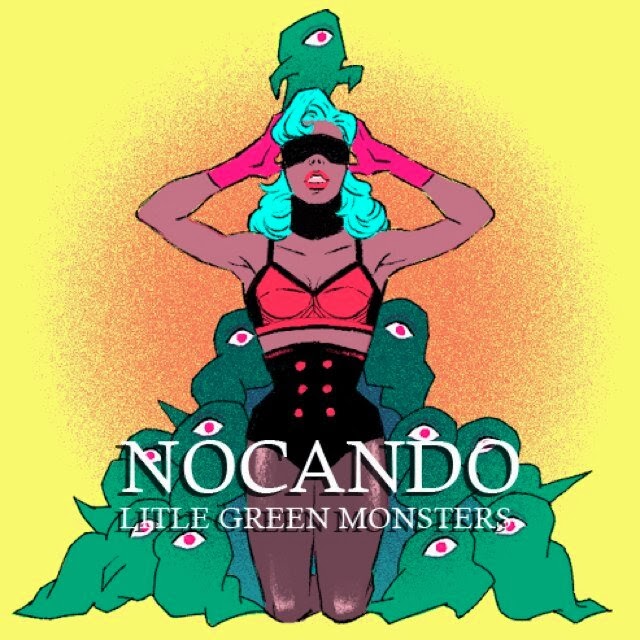
Los Angeles MC and Hellfyre Club founder Nocando might be more well known for his world class freestyling ability than for his actual musical output, but I have a feeling that might change after the release of his upcoming 2nd solo album Jimmy The Burnout.  The lead single “Little Green Monsters” just received a killer video treatment that makes an already really cool song that much more memorable.  It’s not exactly clear what’s going on in the video beyond Nocando being able to seemingly transport himself into whatever he’s watching on TV mixed with close-up shots of his blood covered head spinning while he raps and screams, but it works.  It’s simple but disorienting and fits the song’s schizophrenic feel like a glove.  A psychedelic, hazy chorus from Liphemra pulls it all together and makes “Little Green Monsters” one of the most addictive songs of the year to this point.  Jimmy The Burnout drops February 4th on his Hellfyre Club imprint.  You can also listen to Nocando on the excellent hip hop centric podcast Shots Fired with Jeff Weiss from PassionWeiss.com weekly.


Flashback Week: Vince Staples - "Stolen Youth"


Vince Staples - Stolen Youth
Release Date - June 20th, 2013
Label - Blacksmith / A.G.

Vince Staples' name tends to get lumped in with the Odd Future collective, and even though he’s the only guest to appear on Earl Sweatshirt’s landmark debut EARL besides Tyler the Creator and Hodgy Beats, he’s never been a true affiliate.  In fact, during the time his verse for epaR and a couple other appearances on Mike G’s album Ali were recorded Vince wasn’t rapping full time or even treating rap as anything more than a hobby.  A lot has changed in the last few years though, and Staples has quickly established himself as one of hip hop’s premier young talents.  Even though Staples had previously released the excellent mixtape Shyne Coldchain Vol. 1 in 2012, Stolen Youth was the first full length project that I came across from Staples.  His talent was evident on his early Odd Future guest appearances, but his unique perspective and outstanding writing ability impressed me more and more each and every time I listened to Stolen Youth.

I might not have even given the project a chance if he hadn’t released it for free, the fact it was produced in full by Mac Miller (who gets co-billing as Larry Fisherman) didn’t seem like a strong selling point at the time, but a couple of songs that Vince appeared on the year before (one with Michael Uzowuru and the other with Domo Genesis) convinced me he was a rapper worth checking for.  The album was recorded at Mac’s home studio and while I’ve never been a fan of Mac Miller the rapper, the beats on Stolen Youth are solid throughout.  Melodic and varied, but sparse enough to make sure Vince’s vocals are always front and center.  Mac lends vocals to a couple tracks as well, joining a handful of guest MC’s including ScHoolboy Q and Ab-Soul.  All of the guests (including Mac) do their best to keep up with Staples, but except for ScHoolboy Q the rest of the rappers are basically killing time until Vince gets back on the mic.

Staples’ vivid storytelling captures the emotions of surviving a childhood where violence and crime simply came with the territory.  At times Stolen Youth reminds me of Kendrick Lamar’s now Grammy nominated album Good Kid, M.A.A.D City, not in quality or scope, but because of the way both artists offer honest accounts of how hard it can be to avoid trouble when you grow up in a neighborhood that forces a certain mentality upon its inhabitants out of a simple desire to survive.  "Guns & Roses" is the album’s standout song and one of my favorite songs of the year.  He says more in this opening passage of the third verse than some rappers do in their entire careers-

I had it all in my home but mother never noticed
The neighborhood where I roamed was known for countless encounters
Of people pressin' they line, I try to stay in my boundary
When bounties placed on your head for shit you never had did
You just conform to survive

Vince consistently displays an uncanny ability to make a foreign perspective intensely relatable.  His wordplay is subtle but clever and rewards repeats listens.  Most of all Vince Staples makes it sound easy, both in his ability to keep his content fresh and to seamlessly adapt his flow to any song he happens to rap on.  Since Stolen Youth was released, Staples has seen his profile raise considerably thanks to his show stealing performance on Earl Sweatshirt's single "Hive" and he seems to be on the verge of a big 2014.  Stolen Youth was released in a summer filled with great rap releases and hasn't received the critical acclaim it deserves to this point, but I have a feeling that in a few years it's an album that a lot of heads are going to pleasantly rediscover.


Flashback Week: Open Mike Eagle - "Sir Rockabye"


Open Mike Eagle - Sir Rockabye
Release Date - July 7, 2013
Record Label - Hellfyre Club

Track for track, there wasn’t a 2013 rap release better than Open Mike Eagle’s Sir Rockabye EP.  You won’t find it on many year-end lists because of its length (5 songs) and the fact that it was a free project that seemed to drop out of nowhere, but it’s an incredible release that deserves more attention than it’s garnered to this point.  Often artists drop free EP’s between albums to keep their names out there and to find a way to release b-sides that didn’t survive album cuts, but that’s clearly not the case here.  The brilliance of each and every song on Sir Rockabye had me wondering how high to set the bar for Mike’s forthcoming 2014 album(s) if this collection of songs was offered up for free.


I highlighted the creative single “Degrassi Picture Day” for WLFY a couple months ago because of its crossover appeal, but you could single out any of the EP’s five tracks as a song of the year contender.  The Quelle Chris produced “Middling” is one of the rawest straightforward rap songs Open Mike Eagle has ever made and addresses musicians (and people in general) who are “about as edgy as Bob the Builder” and play it safe rather than taking a chance.  There aren’t many songs I’ve enjoyed listening to more this year than the catchy NSA protest tune “Password (tiny man raps)”, especially the escalating, visual 2nd verse which is my single favorite verse of 2013.  Open Mike is often put in the ‘Alternative Rap’ box because of his versatility and often experimental approach, but he proves with songs like “Middling” and “Password” that he can spit with the best of them in the traditional sense while still bringing the same level of thought and wordplay that he does to his more freeform offerings.


Despite the EP’s short length, Open Mike’s ever-increasing artistic range is on full display as well.  He sings or raps the hook for every song and sometimes blends the two so well (on both the hooks and the verses) that you can’t really call it singing or rapping.  The jazzy production from Moka Only and breezy, nostalgic verses from Mike and Has-lo make “Clean It Up” sound like a Native Tongues affiliated track from ’94 while the brutally honest (“But nobody but your momma give a fuck ‘bout what you feel like so…”) “Mef’s Lament” cleverly flips an old Method Man line into a psychological head trip of a song that only Open Mike Eagle could make.  He’s quickly becoming the type of artist that’s impossible to pin down.  Just when you think he’s released his defining work and has settled into a groove, he expands his range in a direction you never saw coming and does it better than you ever could have imagined.  2013 might have been the first year in a while that Mike Eagle didn't release a full length album, but he clearly wasn't taking a break.        


REVIEW: Armand Hammer- "Race Music"


 Armand Hammer– Race Music
Record Label – Backwoodz Studioz
Release Date – October 22, 2013

Instead of opting for traditional liner notes or lyrics in the CD booklet for their new juggernaut of an album Race Music, MC’s billy woods and Elucid (working under the group name Armand Hammer) chose to use a passage from an essay written by American literary great James Baldwin entitled Down at the Cross.  The passage contains Baldwin’s account of a conversation with a young member of the Nation of Islam during the 1960’s.  The exchange turns into a rumination on the past, present, and future of an African American populous that was determined to succeed but faced obstacles beyond their control that made success on a larger scale near impossible.  The decision to use the Baldwin passage helps to set the mood for the album, but also sets the bar for the level of thought and skill that Elucid and woods intended to bring to the project.  Rappers rarely seem to get the proper amount of credit for their writing skills and woods and Elucid seem determined to prove that their music holds substantially more weight than it’s given credit for and should be viewed through the appropriate lens.    

The one-two punch of “Where the Wild Things Are” and “Renaissance Garments” found right past Race Music’s midpoint might not seem like a purposeful sequence at first, but when the songs are examined through the context of the Baldwin passage and the underlying racial identity themes found throughout the album, they emerge as the album’s emotional core.  “Where the Wild Things are” opens with Elucid vividly describing his relationship with violence as youth, from childhood fistfights to a gradual realization of the all-too-real gun violence that left his and so many other neighborhoods in terror.  Woods’ verse has not only become my favorite on the album, it’s one of the best verses about growing up in America’s violence-riddled, racially segregated inner city neighborhoods as I’ve ever heard-  “Dumb out, stupid nice / Waiting For Superman, classroom fulla kryptonite / Juvenile Hell, The Trife Life / Ossie Davis been dead, now they hand you gun and knife / said Do The Thing Right, banana in the tailpipe / eyes squeezed tight squeezing off on a-alikes with the Armalite / born yesterday but hey, they was up all night / looking for n***** only found they selves / pulling on triggers / spot Enemy outside his home, let fly like Predator drone / hell to pay, like predatory loan / Rule Of the Bone did the Regents off the dome / studied the streets, prepaid the phone, hand a lil’ n**** the heat / you don’t really want to know how it go, like ground beef / a mother’s grief, overdubbed on top some hot beats / shots cheap, foot chase in Rock Creek / I’m wired, can’t sleep behind a fade someone caught last week / King of the Wild Things, made it home for supper / You should see the other kid, he’s a dead motherfucker”.

The harsh realities brought to light on “Where the Wild Things are” are contrasted perfectly with the somewhat nostalgic look back at their own adolescent desire for fashionable gear on “Renaissance Garments”.  I say ‘somewhat’ nostalgic because as Elucid reminds us on his verse, the perceived need for these status symbols is often closely tied to the violence described on “Where the Wild Things are”.  “Renaissance Garments” was produced by underground super producers Blue Sky Black Death who also provided the spooky beat for “Nosferatu”, a clever song about real world vampires who lurk on the outskirts of society.  Woods' verse seems to be from the perspective of a pimp and Elucid's from that of a cult leader, but the vampire metaphor and personal touches allow the song to work on multiple levels.  Both MC’s rarely offer the same perspective on a single song and it often seems as if one writes a verse that inspires the other to take the song in a completely different direction.  This can make the album difficult to follow at first, but ultimately gives Race Music an unparalleled level of depth when compared to other contemporary hip hop LPs.  

“Willie Bosket” is another standout song that is closely tied to Race Music’s underlying themes.  Elucid’s verse about an “underprivileged, over-medicated” youth who’s been done wrong since day one is a chilling account of how a broken family and flawed school system can lead a person who only wants to “make my family proud” into mental illness and disrepair.  Woods’ verse takes the listener through the day in the life of a crack/PCP addict.  The level of detail and emotion in both verses really allows the despair of the song to come through and it works perfectly over an energetic trap style beat from Marmaduke that stands out on an album filled with great beats.  Marmaduke has been making beats for billy woods for several years and has always been a versatile, talented producer, but his work here is truly special.  He contributes four tracks (“Willie Bosket”, “Frog and Toad are Friends”, “New Museum”, and “White Lies”) that at any given moment could rank as my four favorite songs on the album. 

While the concepts and the angles presented on the album are abundant and even overwhelming at times, the fact both that both artists are established solo artists with extensive discographies makes it easier for them to still maintain individual narratives and aesthetics throughout such a collaborative project.  Some songs like “Hatchet Job”, “Shark Fin Soup”, and “No Roses” feel a bit like billy woods songs featuring Elucid because of their similarity to some of the relationship/drug dealer story lines found on his album Dour Candy while others (“Black Ark”, “Sunni’s Blues”, and “Kanun”) feel like Elucid songs featuring woods because of their mystical, esoteric production and hypnotically abstract flows that would have been a great fit on Elucid’s Cult Favorite album with A.M. Breakups.  “Duppy” might be the best example of both artists completely doing ‘their thing’ but still making it work perfectly in the context of a group song.  Woods astoundingly honest and insightful verse about the events and mood surrounding his father’s death and subsequent funeral in Africa is the type of existentially brilliant MCing that’s made him one of the most under appreciated artists in hip hop for over 10 years now.  Elucid curves billy’s funeral/witchcraft narrative into a verse that describes the ritual lifestyle of nature worshiping cult that lives in the forest.  Elucid’s ability to pen mesmerizing verses concentrated on religion, the occult and supernatural forces was established on the Cult Favorite album and resurfaces throughout this album.

Race Music is light on guest appearances, but those that do show up really hit their marks.  Underground veteran Creature adds a show stealing verse to the Uncommon Nasa produced banger “Hand Over Fist” that works perfectly in the context of the album, closing with the lines- “Stay safe, what you invite can take ya / Where the sun stood still on the darkest corner / Numb can’t feel like a heartless mourner”.  Marmaduke loops a Cults sample to great effect on “New Museum” as Open Mike Eagle and Busdriver join Armand Hammer for a lightning round style posse cut that’s about trying to maintain as a serious artist in an era where art rap doesn’t get near the respect it deserves.  While woods and Elucid may have aspirations for the album that transcend stereotypical views of rap music, they are clearly students and fans of the art form and don’t eschew traditional styles altogether.  Their rhyme structure, wordplay, and references stand out even if the listener isn’t immediately able to flesh out the larger themes and concepts that are in play. 

The lead single “Shark Fin Soup” and “Frog and Toad are Friends” are probably the most straightforward showcases for the undeniable linguistic skill that both MC’s possess.  The latter’s no-chorus, tag team format teamed with Marmaduke’s simmering production makes it one of the album’s true high points.  An unapologetic demand for respect, “Frog and Toad are Friends” is two artists at their peak letting it all hang out.  Woods makes their intentions clear in his standout 2nd verse when he spits “this year, it’s no honorable mentions / unify the belts, end all dissension”.  His perspective makes a lot of sense if you’ve paid any attention to his and Elucid’s solo work over the last year.  Elucid released his long anticipated LP with producer A.M Breakups For Madmen Only back in March and woods dropped a one MC/producer collab of his own with Blockhead entitled Dour Candy in June.  I had the privilege of interviewing both artists about their solo albums in a track by track format for ThoughtOnTracks.com and the amount of work that each of them put into every song was astounding.  The fact that they were able to write, record, and release a monster of an album like Race Music in such a short amount of time is all the evidence I need to hand Armand Hammer the tag team title to complete the belt unification, the only question is, who’s the world champ and who gets stuck with the intercontinental belt?